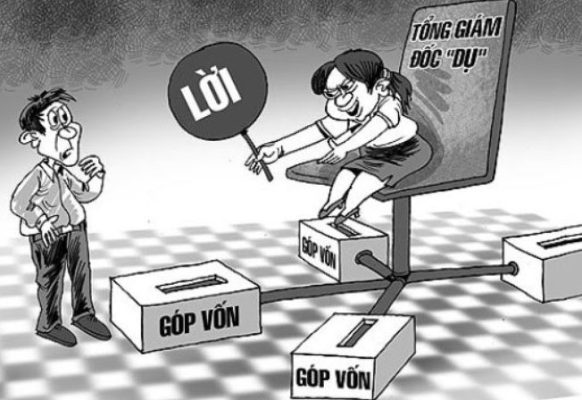

A university student in the city. Ho Chi Minh opened the trading app for the first time, saw that EUR USD was at 1.08 and was pretty sure that one euro must be worth about one dollar and eight cents. Up until now everything is fine. Then the price moved up, the student pressed sell because he thought the dollar was about to increase, and a few minutes later wondered why his account suddenly reported a loss.
📢 Join the channel Telegram belong to AnonyViet
Update new articles, cool tools and IT tips fastest
Such mistakes are surprisingly common, and often have nothing to do with poor analysis. Anyone who has researched What is forex? More than a day everyone knows the basic idea of exchanging one currency for another, but the way prices are actually written down makes a lot of newbies in Vietnam stumble. However, once the logic is understood, it rarely causes trouble again.
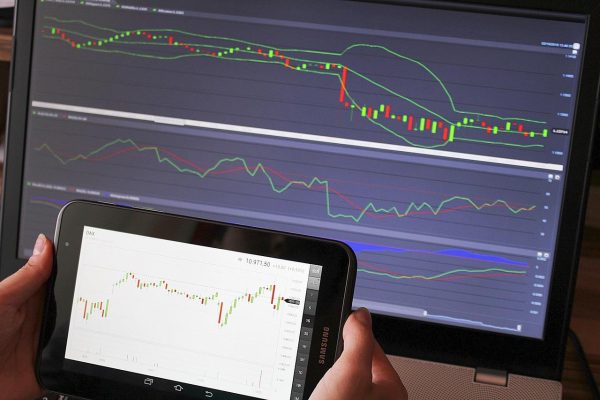
The Money That Comes First Is the Important Money
Each pair has two currencies, and their order is not random. The first currency is called the base currency, and the price tells you how many units of the second currency it takes to buy one unit of that currency. So when EUR USD shows 1.08, it simply means that one euro costs about 1.08 US dollars.
This is the part that people often misunderstand. When you buy EUR USD, you are buying euros and paying in dollars. When you sell, you do the opposite. The whole pair moves according to the movement of the first currency relative to the second currency, so a rise in price means the euro is strengthening, not the dollar.
Honestly, written out like this it sounds obvious. But on a busy screen at 9 p.m., when US data is about to be released, it’s easy to forget which side you’re actually on.
Why Increasing USD VND Is Not Good News For Vietnamese Dong
This is where the story becomes familiar to Vietnamese traders. In the USD VND pair, the dollar comes first, so the price tells you how much dong it takes to buy one US dollar. If that number increases, say from about 26,000 to 26,300, each dollar now costs more dong, meaning the Vietnamese dong has actually weakened.
Many people instinctively translate the larger number into the stronger local currency, and that takes them by surprise. Imagine a person in Da Nang at 8 a.m. on a Monday morning, waiting for money from a relative working in Japan or Korea. The increase in USD VND is good news for them when exchanging foreign currency to dong, but it is not very pleasant for an importer in Hai Phong who needs to buy dollars to pay foreign suppliers.
Two Prices, And Only One Is Yours
Look closely at any quote and you’ll see two numbers, not one. The lower number is the bid price, which is what you get if you sell, and the higher number is the ask price, which is what you pay if you buy. The difference between these two levels is the spread, and that difference is part of the cost of every transaction.
Anyone who has ever passed by the gold shops on Ha Trung Street in Hanoi has understood this, even though they may have never thought about it that way. The price list shows the buying and selling prices, but those are the salon’s prices, not yours. When the store buys, you are selling, so the lower number is the one that applies to you. The trading platform works exactly the same, only faster.
Small Numbers Have Real Meaning
Most currency pairs are quoted to four or five decimal places, and the fourth decimal place is often called the pip. A movement from 1.0800 to 1.0801 in EUR USD is one pip. It looks very small, but with significant leverage and position size, a few dozen pips can turn into real money, in both directions.
Currency pairs featuring the Japanese yen are the exception, as they are usually quoted to two or three decimal places. This is a small detail, but if forgotten, a completely normal movement in the yen can look extremely large or insignificant, depending on which way you read it wrong.
Conclude
A currency quote is essentially just a short sentence telling you how much a unit of one currency costs in terms of a second currency. Read the order correctly, remember which of the two prices is yours and pay attention to the position of the pip, and much of the initial confusion will disappear.
Student in the city. Ho Chi Minh will probably get it right the second time. The trick is to learn it before the market charges your tuition.