
Instead of just increasing the number of sensor dots, the camera upgrade on the iPhone 18 Pro Max focuses on the photographer’s control – from lens aperture to how the camera handles light. Let’s evaluate how the iPhone 18 Pro Max Camera is.
📢 Join the channel Telegram belong to AnonyViet
Update new articles, cool tools and IT tips fastest

The 48MP Fusion main sensor has a customizable aperture
First time on a sample iPhone 18 Pro Maxthe 48MP Fusion main sensor is equipped with a custom aperture, expandable to ƒ/1.48. In previous generations, the main camera only came with a single fixed aperture; Now the device can actively regulate the amount of light entering the sensor. Two often difficult shooting situations – low light and large group photos – are thus improved more clearly.
However, custom aperture is not the only factor that determines photo quality. Apple combines this hardware specification with a computational image processing process (computational imaging) running right on the device, meaning that the final image is the result of a combination of sensors and processing algorithms after recording data, not just coming from a number of lenses.
Pro Control: leaves the right to decide parameters to the photographer

In parallel with the new hardware, the Camera application on the device is supplemented with a feature group called Pro Control. Instead of letting the automatic mode decide everything, users can now manually adjust the lens aperture, shutter speed and white balance right while shooting.
A histogram chart is also integrated directly into the application, helping photographers monitor exposure levels in real time – an operation familiar to professional camera users. This is a software upgrade that is rarely mentioned, but is a link that helps exploit the full capabilities of the new camera hardware.
Bringing all four parameters – aperture, shutter speed, white balance and exposure histogram – into one Pro Control interface saves photographers from having to switch back and forth between multiple third-party professional photography apps. Lens aperture is directly adjustable thanks to the main sensor that supports the aforementioned custom aperture, while shutter speed allows control of motion blur when capturing moving subjects. Manual white balance helps maintain the correct color tone in mixed lighting conditions, instead of depending entirely on the machine’s automatic color recognition algorithm.
Photographic Styles 3: personalization goes deeper than photo texture
Apple’s ability to personalize images is also expanded through Photographic Styles 3. In addition to the familiar color options, the new version allows users to further intervene in the texture and noise of the photo – two factors that directly affect the visual feel and texture of the photo.
Thanks to that, personal impressions can be put into photos right at the time of shooting, instead of just editing colors in post-production as was familiar before.
Video recording: Cinematic effects, 4K time-lapse, and background music separation

The video recording segment on this camera system also recorded some changes. Cinematic Effects can now be applied after recording has been completed, even for videos up to 60 frames per second – users are no longer required to select the effect at the moment they press record.
Time-lapse is upgraded to 4K resolution and supports Dolby Vision HDR. The Audio Mix feature has also been improved with the ability to separate background music from the main sound, better serving the needs of recording and processing multimedia content right on the device.
New generation heat dissipation vapor chamber: maintains performance during long recording sessions
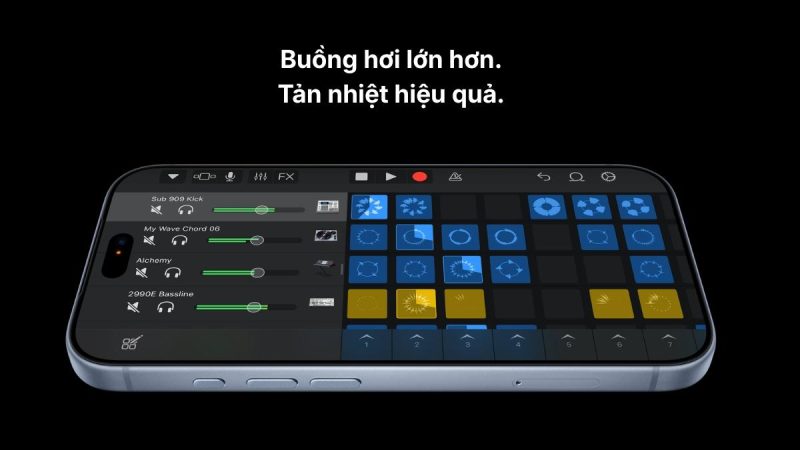
The above-mentioned rendering features – especially 4K time-lapse, Cinematic Effects and Audio Mix processing – all require the processor to operate continuously for long periods of time without performance degradation due to overheating. To respond, the iPhone 18 Pro Max is equipped with a new generation vapor chamber, which according to Apple’s announcement can maintain continuous performance about 40% higher than the previous heat dissipation design.
For users who need to record long videos, shoot continuously in ProRAW mode or process photos right on the device, the ability to maintain stable performance over a long period of time helps limit the device overheating and reducing processing speed mid-process – factors that directly affect the experience when exploiting the camera and editing features mentioned above.
Apple Reference Image mode: a new layer of authentication for original photos
Another notable feature is the Apple Reference Image mode. When Apple Reference Image mode is enabled, the device records digitally signed sensor data to create an original, uneditable image. This image can be viewed side by side with the processed image right in the Photos app, helping users compare whether the image has been changed compared to the original or not.
In other words, the camera on the device does not just stop at recording, but also contributes to the process of authenticating digital content – an issue that is receiving more attention as AI-generated photos become more and more popular.
The general point: control is more important than parameters
Looking back at it all, the changes on the device’s camera are not just about increasing the number of dots or adding lenses. From custom aperture, Pro Control groups, Photographic Styles 3 to original photo authentication tools, the general direction is to give more control to the photographer – suitable for users who want to be proactive in the content creation process, instead of leaving it entirely to the machine to handle it.
This is also the general trend of the whole line iPhone 18 This year, when Apple focused many software and hardware improvements on the needs of in-depth photography, instead of just stopping at upgrading individual parameters.