
The debate that Linux is better than Windows never ends. It’s undeniable that Windows is currently the most popular operating system today, and the reasons why everyone loves Windows are different. Some people like it because of its beginner-friendliness, while others like it because their favorite apps are not available for other operating systems. Personally, the only reason why I still Use Windows and Linux in parallel This is because Linux doesn’t have Adobe’s Suite.
| Join the channel Telegram belong to AnonyViet 👉 Link 👈 |
Meanwhile, GNU/Linux has also become very popular recently and is all set to grow by 19.2% by 2027. Although this is a good indicator of the operating system, most people still ignore it. So, this article will enlighten believers with 10 reasons that prove Linux is better than Windows. To be objective, you can refer to the Reasons I like and dislike Linux.
10 reasons Linux is better than Windows
1. The greatness of open source
Simply put, we say a software is open source when its source code (application logic) allows anyone to edit it. This means that as soon as you download an open source software, you will have full ownership of it. It doesn’t sound very business but very community.
Because Linux is open source, thousands of developers can contribute “better versions of their code” to improve the operating system. This characteristic has helped Linux become a solid, secure and highly customizable operating system.
2. Distributions
Open source has allowed developers to create their own versions of Linux, called distributions. There are hundreds of distributions for users who prefer different needs such as friendliness, security, etc.
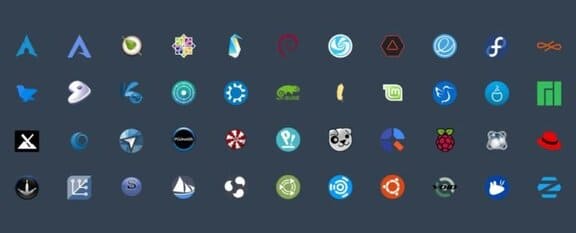
Therefore, you do not need any expertise to use Linux because there are many user-friendly distributions and you can choose one of them to serve you in your daily work. For newbies, distributions like UbuntuLinux Mint, Pop! _OS and other distributions based on Ubuntu or Debian are quite easy to use.
3. Desktop environment
Think of the desktop environment as Android’s OneUI, ZUI, ColorOS interfaces. For example, Ubuntu uses GNOME as its default desktop environment. Here, Ubuntu is usually the base and GNOME is the interface that can be replaced by other interfaces.
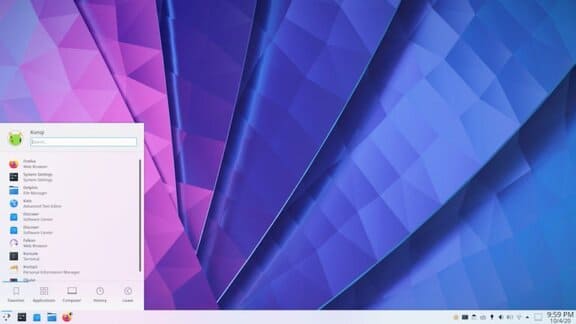
Desktop environments are highly customizable and each has its own unique characteristics. There are more than 24 desktop environments today, but some of the most popular are GNOME, KDE, Mate, Cinnamon and Budgie.
4. Application and package manager
Most applications on Linux are open source. For example, a good alternative to Microsoft’s Office suite is Libre Office. Aside from all the alternative apps you can download right now, the only thing that’s irreplaceable is the ability to play games on Linux. I always assert that Linux is not as good at playing games as Windows, but we will see more games offered for Linux in the future.
Basically, package managers manage what is installed on your computer and allow you to install, update, or remove software with ease. You only need one command to install a new application because the package managers will help you do the rest. Apt is the package manager used in Debian/Ubuntu-based distributions, while Arch/Arch-based distributions use Pacman. However, you can also use other package managers like Snap or Flatpak.
5. Terminal
Since Linux was originally created to run on servers, you can navigate the entire system with just commands (terminal). Terminal is the heart of Linux; That’s all you need to learn to master Linux. This is also the second important reason I decided to use Linux.
You can automate tasks with the ability to code and deploy your own scripts. Great!
6. Multi-device support
You might think that Linux is not popular but, the majority of devices in the world run on Linux. Everything from phones to IoT devices like smart toasters runs the Linux operating system. Even Microsoft uses Linux in its Azure cloud platform.

Since Android is based on Linux, recent developments have given rise to operating systems such as Ubuntu Touch and Plasma Mobile. It’s too early to say that operating systems have a future in the mobile phone industry, where rivals like Android and iOS dominate the market. F(x)tec is one of the OEMs that recently brought Ubuntu Touch and LineageOS to work with XDA. But I’m a little disappointed that my wireless keyboard and mouse do not support Linux drivers. You can still use it, but you can’t customize macros or lights.
7. Linux is not picky about hardware
Linux can run stably on PCs with outdated hardware that is difficult to run Windows. Minimum hardware requirements to run Ubuntu are 2GHz dual core CPU and 4GB RAM. If you think that’s still too heavy, distributions like Linux Lite only require 768 MB RAM and a 1 GHz processor.
8. Portability
The ability to carry an entire operating system on a USB stick is great. This is very useful, especially when your main job involves testing large numbers of machines. Let’s say you’re traveling and don’t want to bring your laptop, if you bring a USB stick, you can boot into Linux on almost any computer.
You can also maintain one home directory across many different Linux installations and retain all of your user files and configurations.
9. Supportive community
The Linux community is very large and it is very important to the development of Linux. You can ask anything even if your question sounds stupid and you will get an answer immediately.
10. Study
The key to learning Linux is to use it regularly and ask questions of the community. Mastering CLI is a challenging task, but limitless career opportunities await you once you succeed.
Above are 10 reasons why Linux is better than Windows, please let me know why you use Linux, as well as why you do not use Linux by commenting below.
Frequently asked questions
Is Linux more difficult to use than Windows?
Not necessarily. Although the terminal is an important part of Linux, many current distributions, such as Ubuntu or Linux Mint, have graphical interfaces that are very user-friendly for beginners.
Can I run familiar Windows applications on Linux?
The majority of Windows applications do not run directly on Linux. However, there are many open source applications that are similar to popular Windows applications, and some tools that allow running certain Windows applications through virtualization.
Is Linux more secure than Windows?
Linux is generally considered more secure because its open source code allows more people to test and fix security flaws. However, both operating systems have their own security risks.